
Your website is one of your most valuable business assets. It is often the first place a potential customer visits before making a decision. Yet many small businesses underestimate how much performance, structure, and content affect conversions. The infographic below highlights key areas that influence the health of your website.
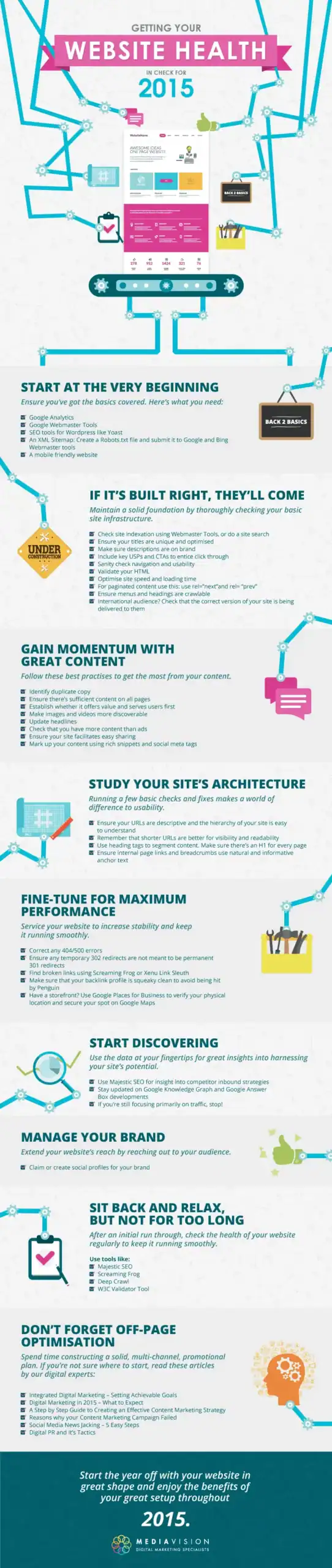
When paired with current industry data, these areas reveal a simple truth: website quality matters more than ever.
Here are eight important statistics every small business should consider while evaluating the strength of their website.
1. 53% of mobile site visits are abandoned if a page takes longer than 3 seconds to load
Speed shapes first impressions. If your website does not load quickly, more than half of your visitors will leave before seeing your content. The infographic emphasizes the importance of strong foundations, such as proper site indexing, caching, and minifying code. When your site is built correctly from the start, speed becomes an advantage rather than a barrier.
2. 88% of online consumers are less likely to return after a poor user experience
Great design is more than visual appeal. Visitors need intuitive navigation, clear CTAs, and content that is easy to skim. The infographic encourages businesses to validate HTML, simplify page layouts, and ensure mobile-friendliness. A clean, consistent experience helps keep first-time visitors on your site longer and increases the chances of repeat engagement.
3. Content marketing generates over 3 times as many leads as outbound marketing at 62% less cost
Strong website content is a growth engine. When businesses regularly publish valuable resources, search engines reward them and customers begin to trust the brand. The infographic highlights best practices for building momentum with content. This includes identifying your audience, publishing consistently, and prioritizing clarity over complexity.
4. 70% of small business websites lack a clear call-to-action on their homepage
If visitors cannot quickly understand what action to take, they leave. CTAs like “Book a Call,” “Get a Quote,” or “Download Your Guide” should be visible and compelling. The infographic’s focus on site architecture supports this, as clear navigation and descriptive URLs help guide users smoothly toward conversion.
5. Fixing technical issues can increase organic traffic by up to 50%
Technical SEO is often ignored, but it has a major impact on visibility. The infographic outlines simple fixes that improve performance. These include repairing broken links, correcting 404 errors, and submitting an updated sitemap. Small tweaks add up, and search engines reward websites that are well-maintained.
6. Visitors are 5 times more likely to leave a site that is not mobile responsive
Mobile traffic now accounts for more than half of global web usage. Your website must adjust seamlessly across all screens. The infographic reinforces this by listing mobile-friendly design as a foundational requirement. A responsive website ensures your content is readable and functional no matter how users access it.
7. Updating local business information improves conversion rates by up to 29%
Local verification matters, especially for service businesses. The infographic recommends validating your Google Places listing, maintaining consistent contact information, and securing your site. These details help customers trust you and ensure you show up in local search results.
8. Companies that blog 16 times per month get almost 3.5 times more traffic than those that blog once a month
Consistency fuels growth. When you regularly share insights, industry updates, or helpful tips, you build long-term trust. The infographic’s final reminders encourage ongoing maintenance rather than a “set it and forget it” mindset. A healthy website is not a one-time project. It is a system you nurture continuously.
What This Means for Small Businesses
- A well-performing website is built on three pillars:
- Strong technical foundations
- Clear content and structure
- Ongoing maintenance and optimization
When these pillars work together, your website becomes one of your strongest marketing tools. It attracts high-quality visitors, keeps them engaged, and guides them toward taking action.
If you’re unsure where your website currently stands, a full Website Health Check can reveal quick wins and long-term opportunities. At Horizon Marketing, we help small businesses strengthen their digital foundations so they can grow with confidence. Want to see how your website measures up? Contact our team for a free website review.